
Tree identification
What tree is this?
Photograph a leaf on its twig, a needle-bearing shoot or a clear section of bark. Get possible names and a specific detail to check on the same tree.
Find a name you can check on the tree.
Possible matches will appear here with supporting traits and a next observation. The guide below helps you choose the evidence a close-up can miss.
Choose the clue you can trace to the tree
A whole-tree view, an attached leaf and a loose blossom carry different evidence. Start with the view you have, then fill the gap.
Six tree details worth more than a silhouette
A canopy outline can start a search. These closer observations help you decide which names survive comparison.
One leaf or one leaflet?
Trace the stalk back to the woody twig. A bud at the base of the complete leaf helps distinguish it from a leaflet within a compound leaf; that bud may need a closer view.
Arrangement on the twig
Look at several attachment points: leaves or buds may occur in pairs, singly in an alternating sequence, or in whorls. Pairs of leaflets on one leaf do not establish opposite branching.
Needles at their base
Show whether needles attach singly, in bundles or in clusters on short shoots. Count a clearly visible group and include its base; needle length without attachment can leave the wrong conifer group in play.
Bark with an age clue
Photograph the trunk and a younger branch separately. Smooth young bark may develop ridges or plates later, so a mismatch with a mature-tree photo does not automatically exclude the candidate.
Buds and leaf scars
After leaf fall, the marks left by leaf stalks and the position, shape and scales of buds remain useful. Include the twig tip plus a few side buds rather than an isolated bud.
Attached fruit or cones
An acorn, winged fruit or cone is stronger evidence when its connection to the branch is visible. A loose object beneath overlapping canopies needs its source checked first.
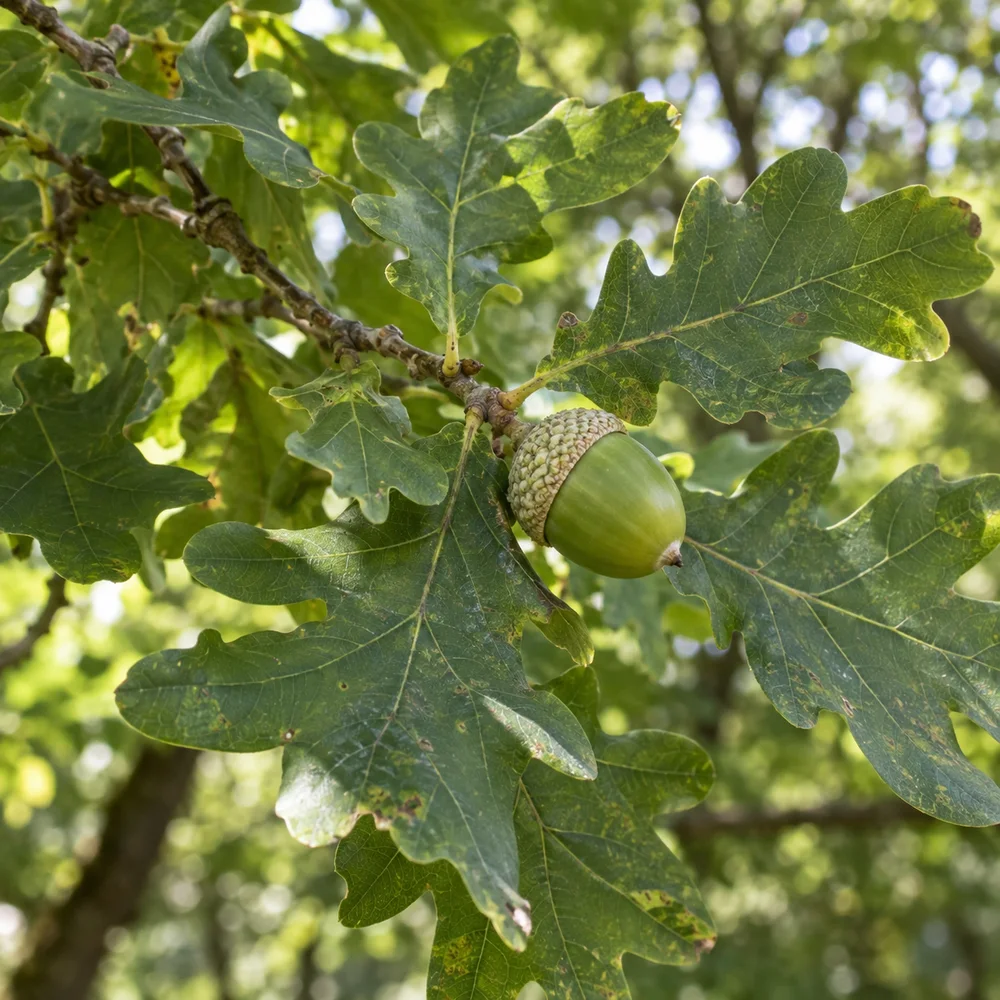
The leaf on the ground may belong to the next tree
Under overlapping crowns, an attractive leaf or acorn can send the search toward the wrong trunk. Compare a reachable attached leaf with the loose one, then trace that branch visually toward the tree. In this view, the acorn, leaf stalks and twig can be considered together; an autumn leaf photographed alone cannot show that connection.
Start with a connection
Show a leaf, needle-bearing shoot or fruit still attached whenever it can be photographed from the ground.
Keep an overview
A wider shot helps you relocate the sampled branch and avoid mixing evidence from neighboring trees.
Mark a loose clue
Say “found underneath” if the object’s origin is uncertain. Keep that uncertainty in the comparison.
Use the right regional key
The linked Wisconsin key covers its own region; use an equivalent local flora elsewhere, and account for planted trees.
Common tree-ID shortcuts that need another look
These are observation exercises, not tool results. Each turns a plausible first impression into a more useful check.
A row of paired green blades
Several small blades face one another along a thin stalk, suggesting opposite leaves.
"First locate the woody twig and the base of the complete leaf. You may be seeing paired leaflets on a compound leaf, not paired leaves on a branch."
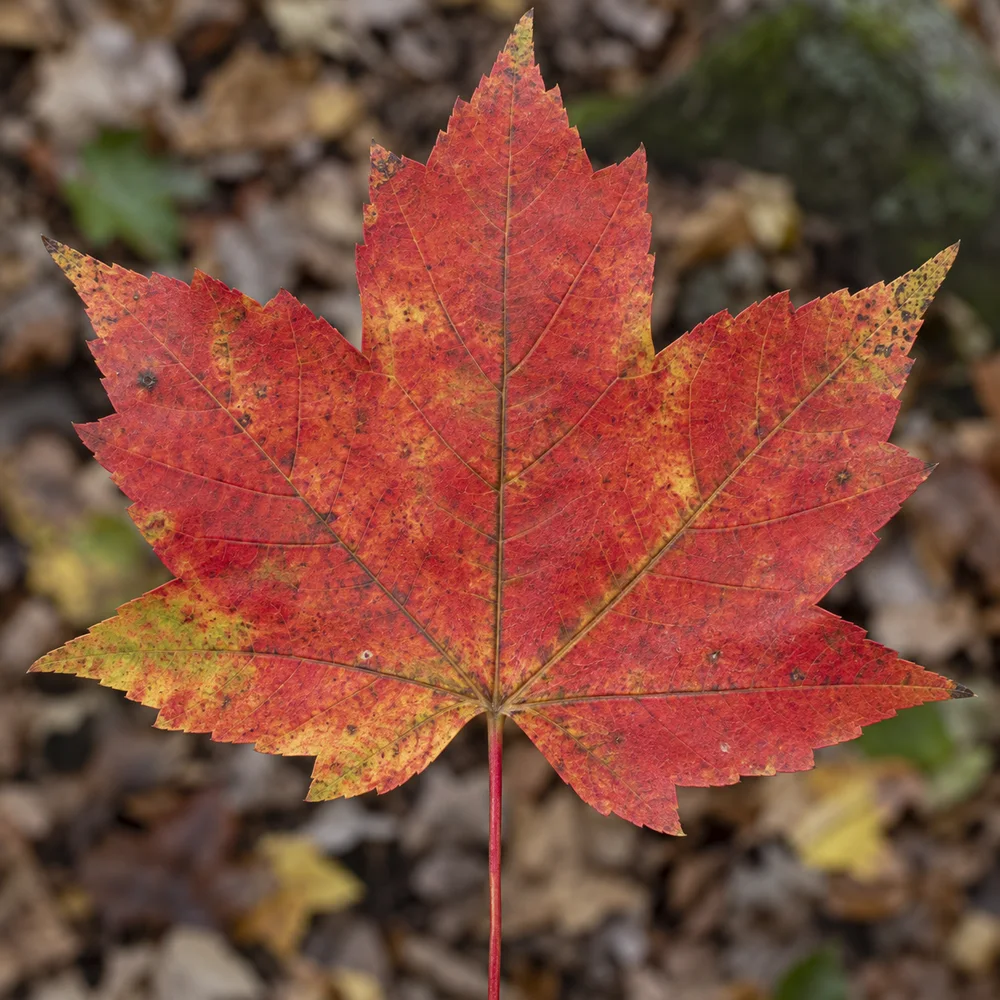
A five-lobed autumn leaf
Its orange-red color makes a familiar maple name seem obvious.
"Use the shape, margin and veins to form a shortlist. Then check attached leaves and buds: autumn color alone does not establish a maple species."
A young tree with smooth bark
The suggested tree has rough bark in every mature specimen photo you find.
"Check the candidate’s juvenile bark and another feature, such as twig or leaf structure. Compare trees at a similar growth stage before rejecting the name."
Needles in a tight group
A cluster looks like a pine bundle from a distance.
"Photograph the base. A bundle emerging together differs from needles crowded on a short shoot; record the attachment as well as the count."
A bare crown in winter
Without leaves, only the trunk and distant branches are visible.
"Add a reachable twig tip, side buds and leaf scars. Bud arrangement provides a different line of evidence from the outline of the crown."
An acorn beside a trunk
The nearest trunk seems like the obvious source of the acorn.
"Check the foliage above and nearby crowns. Use attached fruit when visible, or label the acorn’s origin uncertain rather than assigning it to that trunk."
Build a record of one tree, not a collection of clues
A useful follow-up connects the missing detail to the same individual tree. Keep those observations together as you compare results.
Give each tree its own photo set
Take the overview first, then photograph reachable foliage and bark. Keep a short note so you do not combine one tree’s leaf with its neighbor’s trunk.
Show the whole leaf stalk
When leaflets are involved, include the full compound leaf and where it joins the twig. A crop of one blade removes the distinction you need to make.
Separate trunk and branch bark
Note which part you photographed and roughly how large the tree is. Compare mature trunk features with mature trunks, not with a young shoot.
Describe a managed crown
Mention street planting, hedge clipping or obvious pruning. A shaped crown can hide the growth habit that a field guide illustrates for an open-grown tree.
Record what the season removed
Write “leafless in October” with the region, not simply “no leaves.” If you return later, buds, flowers or attached fruit may supply a missing distinction.
Keep name and risk separate
Identifying a species does not assess decay, branch stability or a removal decision. Photograph from the ground and use a qualified arborist for a structural-safety assessment.
When a tree photo leaves a question open
What leaf, bark and winter photos can establish—and which next detail is worth collecting.
Yes. Upload one JPG, PNG or WebP image up to 5 MB above; no account is required. Add a broad location and a short observation if available. The result is a shortlist of possible names to compare, not a confirmed determination.
Sometimes a leaf can narrow the search, but a detached blade loses twig arrangement and may be only one leaflet of a compound leaf. Photograph the complete leaf and its attachment if possible. If you cannot link a fallen leaf to a tree, identify it as a loose clue rather than proof of the trunk’s identity.
Distinctive bark can help, but age and the part of the tree photographed affect its appearance. Include an overview plus a twig, leaf or bud when possible. If several candidates share the visible bark pattern, keep the identification broader and collect another feature.
Start with a reachable twig showing its tip, side buds and leaf scars, and keep a separate trunk view. Compare bud arrangement, shape and coverings in a guide for your region. Do not assume a distant bare silhouette provides enough evidence for an exact species.
No. Needle-bearing trees include several conifer groups, and some conifers have scale-like foliage. Needle attachment, grouping and cones help narrow them. Some conifers, such as larches, also shed their needles seasonally, so evergreen and conifer are not interchangeable labels.
First check that the photos belong to the same individual, especially if the leaf was on the ground. Then consider whether bark age or a hidden leaf attachment explains the difference. Keep a name unresolved if it cannot account for both views; do not settle the question by averaging AI scores.
No. A planted street or garden tree may originate elsewhere, and naturalized plants can occur outside cultivation. Record location as context. Native status depends on the species and region and should be checked separately in an appropriate local source.
No. An AI name does not establish food safety or assess a tree’s structural condition. Confirm any food identification with a qualified local expert. For decay, unstable branches or removal decisions, get an on-site assessment from a qualified arborist.